Historic Nuclear Agreement between Russia and Kazakhstan
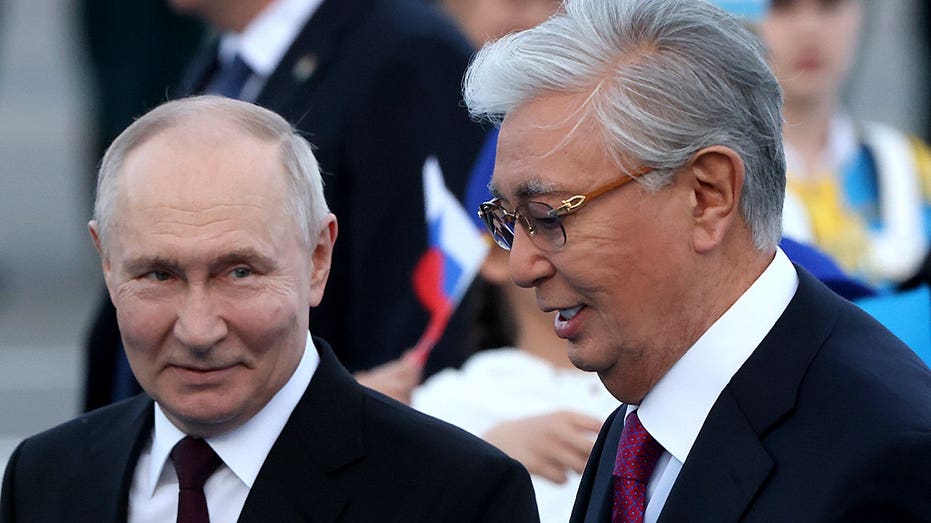
On Thursday, a significant milestone was reached as Russia formalized a groundbreaking nuclear agreement with Kazakhstan, paving the way for the construction of its first commercial power plant. This $16.5 billion initiative, regarded as a strategic geopolitical and economic boon for President Vladimir Putin, was solidified during discussions in Astana with Kazakh President Kassym-Jomart Tokayev.


Financing and Construction Oversight
The project will predominantly be financed through a Russian export loan, which will cover approximately 85% of the total costs, according to Reuters. The Russian state nuclear corporation, Rosatom, has been tasked with overseeing the construction of the facility, which is set to rise near Ulken, a village located along the shores of Lake Balkhash in southeastern Kazakhstan. Notably, Rosatom was selected over notable competitors such as China’s National Nuclear Corporation, France’s EDF, and Korea Hydro & Nuclear Power, marking a decisive victory for Russian interests in the region.
Energy Stability and Geopolitical Implications
This agreement is emblematic of Russia’s determination to enhance its economic and geopolitical influence in former Soviet states, especially in the wake of heightened Western sanctions. Kazakhstan, recognized as the world’s leading producer of uranium, aims to overhaul its aging, coal-dependent energy infrastructure. The introduction of nuclear power is deemed critical for stabilizing the nation’s energy supply in light of these challenges.
Statements from Leaders
During the signing ceremony, President Tokayev underscored the project’s importance, highlighting its potential to transform Kazakhstan’s energy landscape. President Putin described the initiative as a “flagship project in peaceful nuclear energy,” asserting that it would significantly enhance energy availability in the country, offering affordable and clean energy to both businesses and households. He also pointed out that the venture encompasses broader industry development, including education and workforce training.
Technical Aspects of the Power Plant
Kazakhstan’s atomic energy agency revealed that the power plant will feature two advanced VVER-1200 Generation III+ reactors. Notably, around $2 billion of the overall $16.5 billion budget will be allocated for security measures and infrastructure development. The schedule indicates that construction is poised to commence in 2027, with the expectation that the first reactor will commence operations by 2034. This timeline aligns with a national referendum set for 2024, where Kazakh citizens will vote on the Balkhash site’s development.
Local Concerns Regarding Nuclear Energy
The transition to nuclear energy presents sensitivity challenges for local communities, many of whom bear the scars of historical events linked to Soviet-era nuclear tests conducted at Semipalatinsk. Public health concerns and environmental ramifications stemming from these tests lead to heightened vigilance among Kazakhstanis regarding nuclear projects. Additionally, the catastrophic 1986 Chernobyl disaster looms large in the collective memory, as numerous Kazakh workers suffered health issues while participating in recovery efforts.
Economic Cooperation Initiatives
Further solidifying the economic ties between the two nations, Bloomberg reported that upon concluding the nuclear agreement, Russia and Kazakhstan also signed a currency swap agreement. This accord, endorsed by Bank of Russia Governor Elvira Nabiullina and National Bank of Kazakhstan Governor Timur Suleimenov, will facilitate transactions using the ruble and tenge, further integrating the economies of the two countries.