Increasing Tensions: U.S. Response to Houthi Threats in the Red Sea
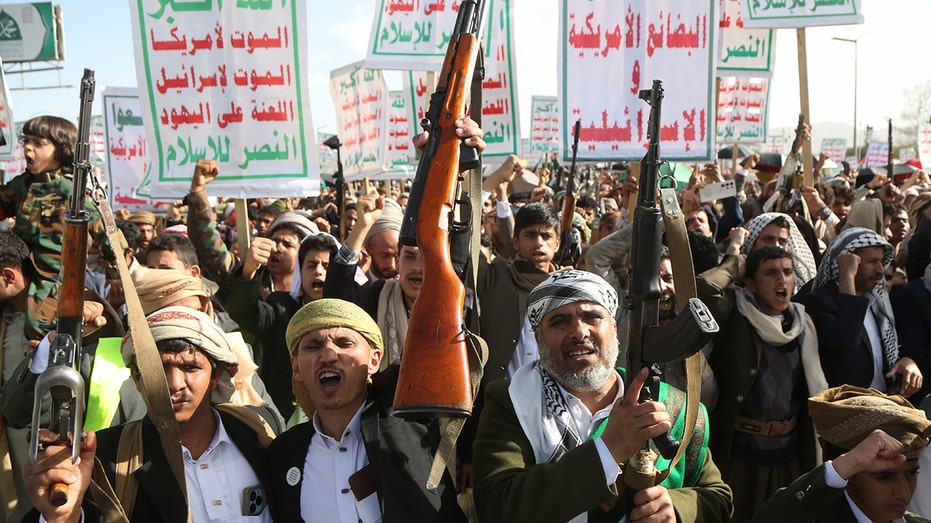
The geopolitical landscape in the Middle East experiences growing tension as the U.S. takes a stand against threats posed by the Iranian-backed Houthi movement. Recently, the Houthis declared a ban on Israeli-owned vessels navigating the Red Sea, branding them as “legitimate targets.” This move significantly heightens concerns regarding the security of one of the world’s most vital maritime routes.


The Strategic Importance of the Red Sea
The Red Sea, particularly the Bab-el Mandeb Strait, plays a crucial role in global oil shipping, linking Middle Eastern oil producers to markets in Asia. With the Strait of Hormuz facing escalating threats in recent years, the Red Sea has gained prominence as an alternative route for safe maritime navigation amidst rising regional tensions.
Houthi Provocation
On Monday, Houthi spokesperson Yahya Saree made an announcement that signified a total ban on Israeli maritime navigation within the Red Sea. This declaration indicates the group’s intent to target what it perceives as enemy movements, ramping up hostilities in an already volatile region.
U.S. Response and Global Implications
In response to the alarming Houthi rhetoric, a spokesperson from the U.S. State Department conveyed the message that both Iran’s provocations and the Houthis’ actions are unacceptable. These developments are viewed as not only increasing tensions within the region but also as significant disruptions to global supply chains, emphasizing the interconnected nature of international trade.
The U.S. has committed to working alongside its partners to ensure the safety and security of navigation in the Red Sea and the Strait of Hormuz, reflecting its ongoing strategic interests in maintaining stability in vital maritime waterways.
Analyzing the Houthi Strategy
Edmund Fitton-Brown from The Foundation for Defense of Democracies offered an analysis of the situation, suggesting that the Houthis are keenly exploiting current U.S. political concerns. By targeting Israeli navigation, the Houthis aim to disrupt U.S.-Israeli relations, which could have wide-ranging repercussions for geopolitical stability.
Having previously served as a U.K. ambassador to Yemen, Fitton-Brown also remarked that effective communication among allies could thwart the Houthis’ attempts to escalate military actions.
Risks of Escalation
Should the Houthis escalate further attacks on shipping within the Red Sea, there is potential for international repercussions. Military responses from both Israel and the U.S. could include strategic strikes targeting Houthi positions in key locations such as Sanaa and Hodeida. This escalation could lead to a more profound conflict, affecting the broader Middle Eastern geopolitical landscape.
Regional Alliances and Ethiopia’s Role
Amidst these tensions, Ethiopia emerges as a pivotal player in the region’s strategic calculus. As the most populous nation bordering the Red Sea, Ethiopia has begun reinforcing its alliance with the U.S. to combat the threat of Islamic terrorism—a significant concern as Iranian influence grows in neighboring Sudan and Eritrea.
Blen M. Diriba, an Ethiopian researcher, highlights Ethiopia’s strategic importance as a barrier against Islamist expansion, presenting it as a frontline U.S. security partner. The nation serves as a stability buffer not only in the Red Sea area but also in counteracting insurgencies such as al-Shabab in Somalia.
Complex Diplomacy
While Ethiopia maintains strong ties with the U.S. focusing on counterterrorism, it also engages diplomatically with Iran, having received support during the Tigray War. Diriba noted that Ethiopia’s approach reflects a complex regional strategy, leveraging multiple alliances to navigate through challenging circumstances without compromising its objectives.
This diplomatic balancing act allows Ethiopia to engage constructively with the U.S. while keeping communication channels open with Iran, a relationship that could prove significant in times of heightened regional tension.
Counterterrorism and Collaborative Efforts
The collaboration between the U.S. and Ethiopia has notably flourished concerning counterterrorism strategies. Both nations utilize the strategic advantages provided by Somaliland, despite its lack of official recognition, to bolster their security efforts in the region.
This partnership underscores the importance of Ethiopia in the wider context of U.S. foreign policy, particularly as it relates to managing threats emerging from Islamist groups and preventing the expansion of Iranian influence across the Horn of Africa.
Conclusion
As the situation continues to unravel in the Red Sea region, the combination of Houthi provocations, U.S. responses, and Ethiopia’s strategic positioning sets the stage for a complex interplay of diplomacy and military readiness. Stakeholders in the area must tread carefully to navigate these tensions, as the risk of confrontation looms over this critical maritime artery, with potential repercussions for global security and trade.
Neither the Department of War nor the Ethiopian government provided comments prior to publication, indicating the sensitive nature of ongoing diplomatic discussions.