Accusations Fly as EU Imposes Sanctions on Israeli Civil Society Groups
Israel’s Deputy Foreign Minister Sharren Haskel claims that the European Union is disguising antisemitism as anti-Zionism amid recent sanctions on Israeli organizations.


Changing Faces of Antisemitism
In a provocative statement, Israel’s Deputy Foreign Minister Sharren Haskel has accused the European Union (EU) of utilizing anti-Zionism as a socially acceptable front for antisemitism. This assertion comes in light of the EU’s decision to impose sanctions on several Israeli civil society groups that oppose Palestinian statehood. Haskel stated, “Traditional antisemitism has adopted a new mask: anti-Zionism,” asserting that this renewed focus effectively targets the Jewish state rather than individuals and has dire implications for Jewish life globally.
EU Sanctions Details
The sanctions detailed by the EU affect four Israeli organizations and three individuals, with the rationale that their activities allegedly support “settler violence” and undermine the aspirations for a Palestinian state. Among those sanctioned is Regavim, an Israeli organization that advocates for the enforcement of Israeli sovereignty over disputed territories. Regavim’s International Director, Naomi Kahn, expressed specific concerns regarding what she describes as unwarranted EU interference in Israel’s internal affairs.
EU’s Justification for Sanctions
The European External Action Service (EEAS) explained that the sanctions aim to target individuals and entities facilitating or endorsing violence and human rights abuses against Palestinians. Regavim has been particularly criticized for its alleged role in promoting the demolition of Palestinian properties. A case highlighted by the EU referenced an EU-funded school in Jabbet al-Dhib, which Kahn contends was illegally constructed on Israeli state land and was subsequently demolished after legal proceedings confirmed its illegality.
The Oslo Accords and Area C
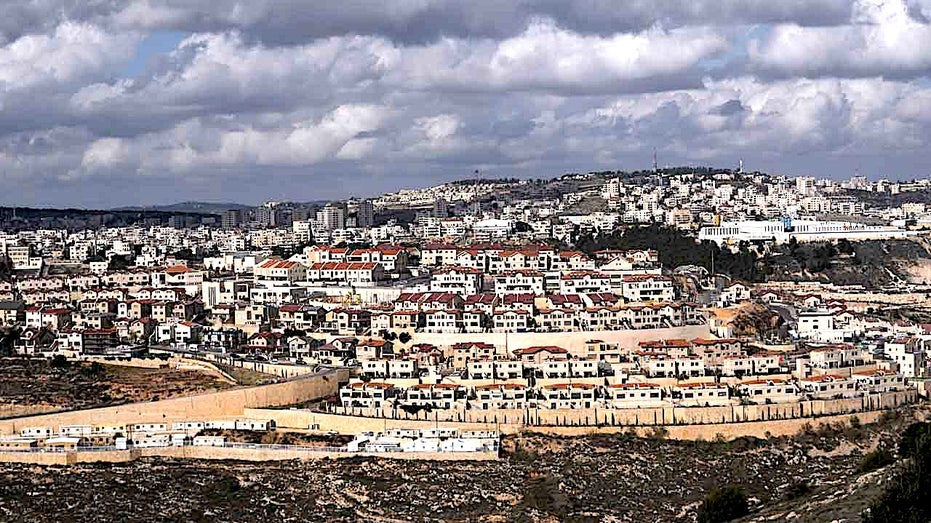
Historically, the West Bank was segmented into Areas A, B, and C under the frameworks of the Oslo Accords. Area C remains under full Israeli control and is the focal point of contention regarding territorial disputes. Kahn articulated that an engineering assessment had rendered the school unsafe for occupation, claiming that the EU and Palestinian Authority (PA) systematically employ illegal structures to assert control over Area C.
Allegations of Widespread Illegal Construction
Regavim has documented the existence of approximately 100 illegal schools within Area C, branding these establishments as part of a broader strategy by the PA aimed at de facto annexation. Their 2023 report estimates that over 103,000 unauthorized Arab-built structures exist throughout the territory, suggesting that the PA, with external backing, has engaged in extensive illegal construction activities.
Israeli Government’s Response
In light of these allegations, the Israeli cabinet has recently approved a series of measures designed to counter the PA’s attempts to solidify control over the contested areas. This initiative particularly rejects the establishment of a parallel land registry in Area C by the Ramallah administration, with the cabinet declaring such moves as lacking any legal legitimacy.
Reiterating the Real Targets
Haskel further articulated that the EU’s actions are misdirected. She emphasized that the actual target of these sanctions is not violence itself but legitimate political opposition to the Palestinian Authority’s actions. In her criticism, Haskel accused the EU of disregarding the Oslo Accords, manipulating realities on the ground to effectively expropriate land from Israel. She refuted the notion of a moral equivalency posited by the EU, particularly between law-abiding Israelis and groups such as Hamas, asserting that Israel actively prosecutes individuals who violate the law.
Seeking Clarification from the EU
Fox News Digital reached out to the European External Action Service for comments regarding these allegations and the motivation behind their sanctions. However, the EEAS refrained from providing further clarification, instead referring back to their original statement on the sanctions.